In the ever-evolving landscape of video games, few titles manage to sustain their relevance and captivate audiences for years after their initial release. As of 2026, Stardew Valley, the beloved farming and life simulation game created by solo developer Eric "ConcernedApe" Barone, continues to flourish. Its journey from a passion project to a cultural touchstone has been remarkable, earning it a place in gaming history alongside monumental releases like The Elder Scrolls V: Skyrim and The Legend of Zelda: Breath of the Wild. While these three games hail from different genres—open-world fantasy adventure versus cozy farming sim—they share a profound and rare quality: an experience that remains deeply rewarding hundreds, if not thousands, of hours in. This longevity is not a product of mere size but of intricate design, systemic harmony, and a deep respect for player agency, making them benchmarks against which other games are measured.
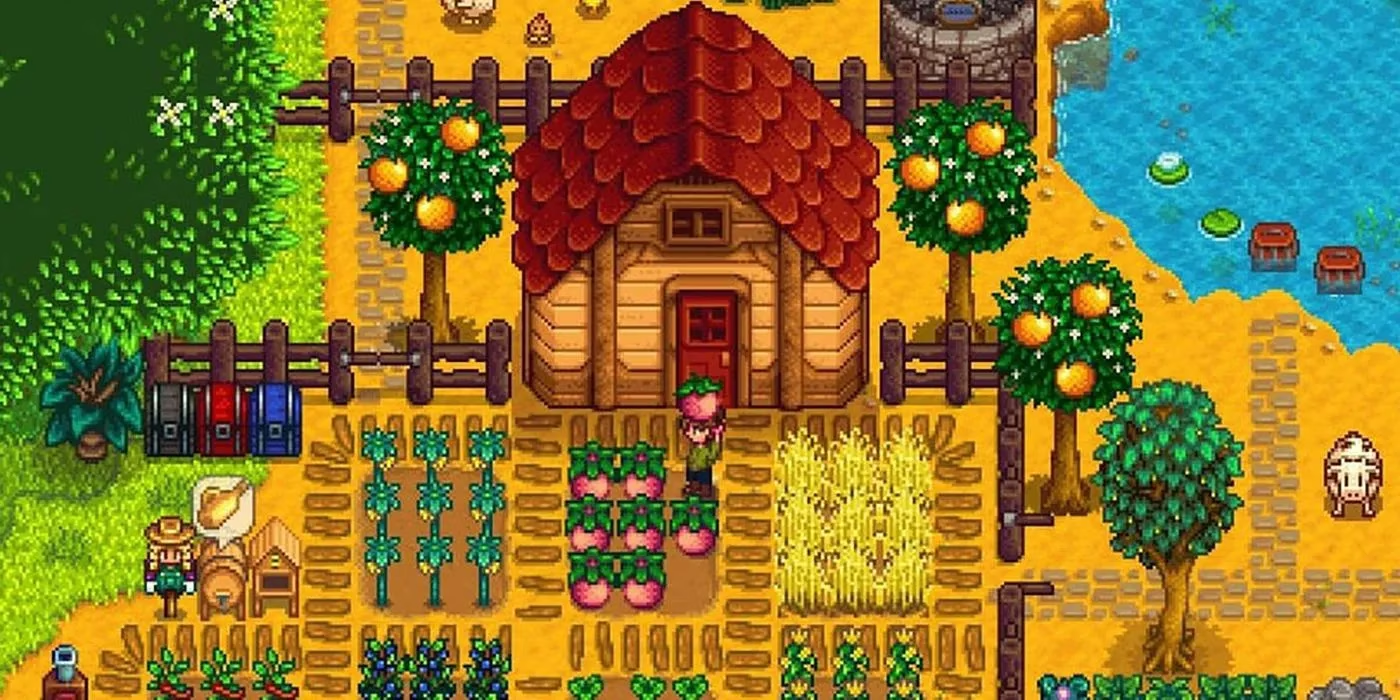
At its core, Stardew Valley's genius lies in its deceptively simple yet masterfully interwoven systems. A player's day can be a symphony of activities: tending to crops that grow like a patient gardener's clockwork, caring for livestock, delving into monster-infested mines, fishing in serene waters, or building relationships with the quirky residents of Pelican Town. These mechanics do not exist in isolation; they harmonize like instruments in a well-rehearsed orchestra. The crops you grow can become gifts for villagers, the ores you mine forge better tools for farming, and the friendships you cultivate unlock new storylines and benefits. This creates a gameplay loop that is as comforting as a well-worn quilt and as endlessly engaging as a complex ecosystem where every action ripples outward. Similarly, Skyrim offers unparalleled freedom through its expansive skill trees, allowing players to morph from a stealthy assassin to a powerful mage within the same save file. Breath of the Wild's variety is encapsulated in its myriad Shrines, each a self-contained puzzle-box or combat challenge that rewards curiosity and cleverness.
🎮 Pillars of Longevity: Content, Customization, and Community
The enduring appeal of these titans can be attributed to three key pillars:
-
A Bottomless Well of Content: All three games are famed for their vast amount of things to see and do. Beyond the main objectives, they are brimming with side quests, hidden secrets, and collectibles. In Stardew Valley, even after restoring the Community Center, mastering the Skull Cavern, and achieving perfection on the farm, players might discover a new fish season, a forgotten recipe, or a heart event they've never seen. ConcernedApe's commitment to free, substantial updates—like the addition of the entire Ginger Island endgame area—acts as a perpetual spring, ensuring the content well never truly runs dry.
-
The Power of Personal Space: A surprisingly potent source of engagement is the ability to acquire and customize a home. Decorating the farmhouse in Stardew Valley, building and furnishing a homestead in Skyrim's Hearthfire DLC, or meticulously arranging weapons and treasures in Link's Hateno Village house provides a creative, personal outlet. This sandbox-like element offers a potentially infinite canvas for player expression and reinvention.
-
A Thriving Modding Ecosystem: For PC players, the games' lifespans are dramatically extended by vibrant modding communities. Stardew Valley's mod scene, while perhaps not as sprawling as Skyrim's menagerie of dragons-turned-Thomas-the-Tank-Engines, is incredibly robust and creative.

Mods range from quality-of-life improvements and visual overhauls to massive expansion mods like "Stardew Valley Expanded," which adds so much new content it feels like a sequel. These user-created additions are the lifeblood of longevity, transforming the game into a platform for endless creativity. The modding scene is a testament to the game's solid foundation—a canvas so well-prepared that the community feels inspired to add their own masterstrokes.
✨ Artistic Influence and Lasting Impact
Beyond gameplay, these titles have left an indelible mark on gaming's artistic landscape. Skyrim codified a certain gritty, high-fantasy realism for its era. In contrast, both Breath of the Wild and Stardew Valley championed more stylized, evocative aesthetics that prioritized mood and charm over pure graphical fidelity. Breath of the Wild's painterly, cel-shaded world sparked a renaissance in open-world design, emphasizing systemic chemistry and quiet exploration over icon-filled maps. Its influence can be seen in numerous titles, much like a master painter inspiring a new school of art.
Stardew Valley, with its warm pixel art and nostalgic SNES-era soundtrack, proved that visual sophistication isn't solely defined by polygon count. Its success ignited a resurgence in the farming/life simulation genre, inspiring a wave of "cozy games." While most developers offer respectful homages to ConcernedApe's work, the game's iconic assets have become so recognizable that they sometimes serve as a siren's call for less scrupulous creators, though such cases are outliers in a sea of admiration. The game's aesthetic is like a perfectly crafted recipe—deceptively simple in its ingredients but producing a flavor so distinct and satisfying that many try to replicate it.
🏆 The Unifying Thread: A World That Feels Alive
Ultimately, what binds Stardew Valley, Skyrim, and Breath of the Wild is their ability to craft worlds that feel authentically alive and responsive to the player's presence. In Stardew Valley, townsfolk remember your gifts, seasons change the landscape and available activities, and your farm evolves from a plot of weeds into a thriving, personalized estate. It creates a sense of belonging and tangible progress that is as rewarding as watching a dormant seed blossom into a perennial source of beauty. Skyrim's world is filled with dynamic events, faction conflicts, and deep lore that makes every mountain pass feel storied. Breath of the Wild's Hyrule is a playground of physics and possibility, where a player's ingenuity is the greatest tool.
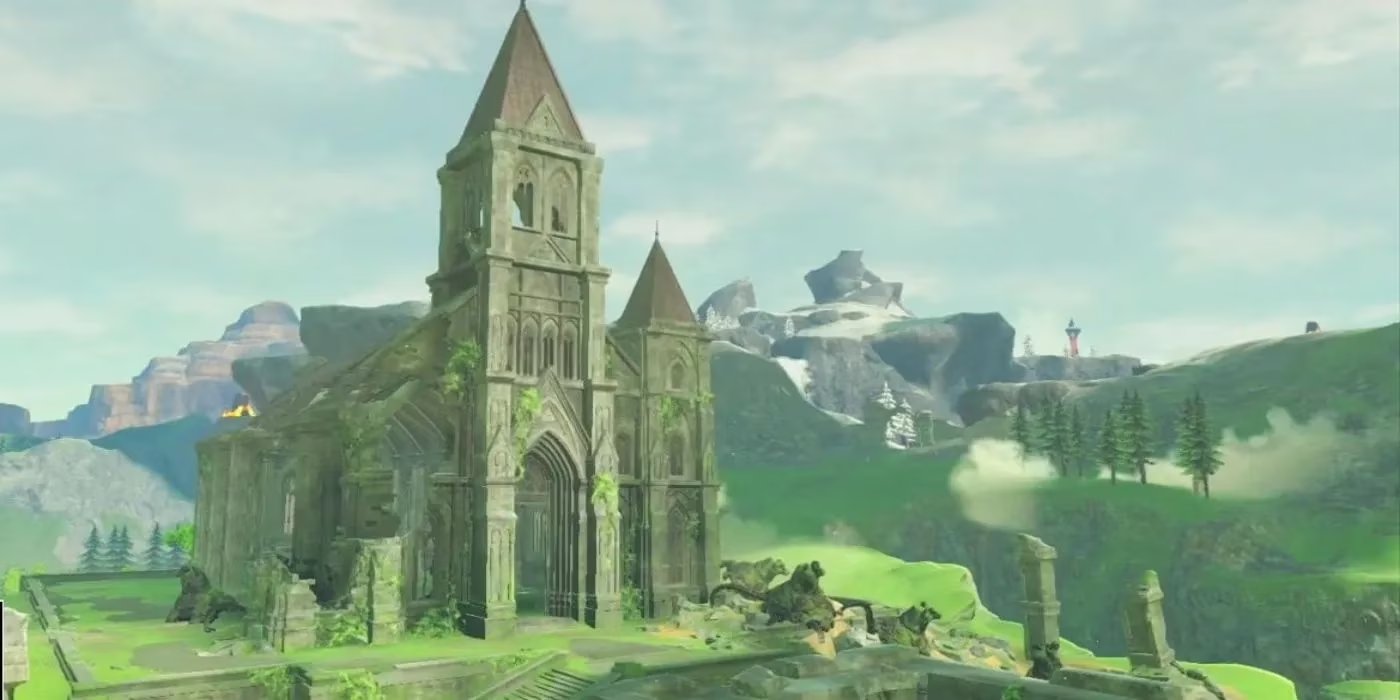
As we look at the gaming landscape in 2026, Stardew Valley's status is secure. It is no longer just a game; it is a phenomenon that demonstrated the potent appeal of player-driven, systemic, and heartfelt design. Alongside the epic scales of Skyrim and Breath of the Wild, it carved out a space for intimacy and granular growth. Together, this unlikely trio represents different facets of gaming's highest potential: boundless adventure, deep role-playing, and heartfelt cultivation. They are not merely games to be completed, but worlds to be lived in, and that is the secret to their timeless appeal.
0 Comments