In the lingering twilight of a rainy 2026 afternoon, Kenji scrolled idly through the DMM Games launcher, his cursor hovering over titles he had played and abandoned over the years. Among the neon advertisements for gacha-heavy MMOs and latest visual novel sensations, an unassuming icon caught his eye: a stylized sunrise over a dusty road, and beneath it the words The Legend of Heroes: Trails of the Dawn. It was a relic from another era—a mobile and browser RPG that had first flickered to life a full decade earlier. He remembered the chatter about its PC debut back in 2020, a fleeting moment of excitement among Nihon Falcom’s western fans who desperately craved any taste of the Trails universe. With a quiet click, he launched the game, and the familiar anime-styled logo bloomed across his screen.
🎮 The Backstory of a Portable Gem
The Legend of Heroes franchise needs no introduction for JRPG veterans. Stretching back to the early 1990s, Falcom’s sprawling saga found its most devoted audience on the Sony PSP and PlayStation Vita. As those handhelds faded into memory, the company sought new soil, and in 2016, Eiyū Densetsu: Akatsuki no Kiseki—better known in English as Trails of the Dawn—emerged as a browser game. Its mobile counterpart followed soon after, alongside a Nintendo Switch port in August 2019. For a while, it was a Japan-exclusive treasure, a side story set between Trails of Cold Steel II and III, offering fans of the sprawling narrative a fresh perspective through the eyes of new protagonists.
When UserJoy brought the mobile gem to PC via the DMM Games platform on May 7, 2020, many wondered if an English localization would finally arrive. Years later, as Kenji navigated the menus in 2026, that question had received a bittersweet answer: no official English version ever materialized. Yet a dedicated modding community had since patched together a fan translation, making the game at least partially accessible to those willing to tinker. For Kenji, reading Japanese was a challenge he accepted, his rusty skills aided by the voice acting and familiar interface.
📜 A Turn-Based Dance with Collection Mechanics
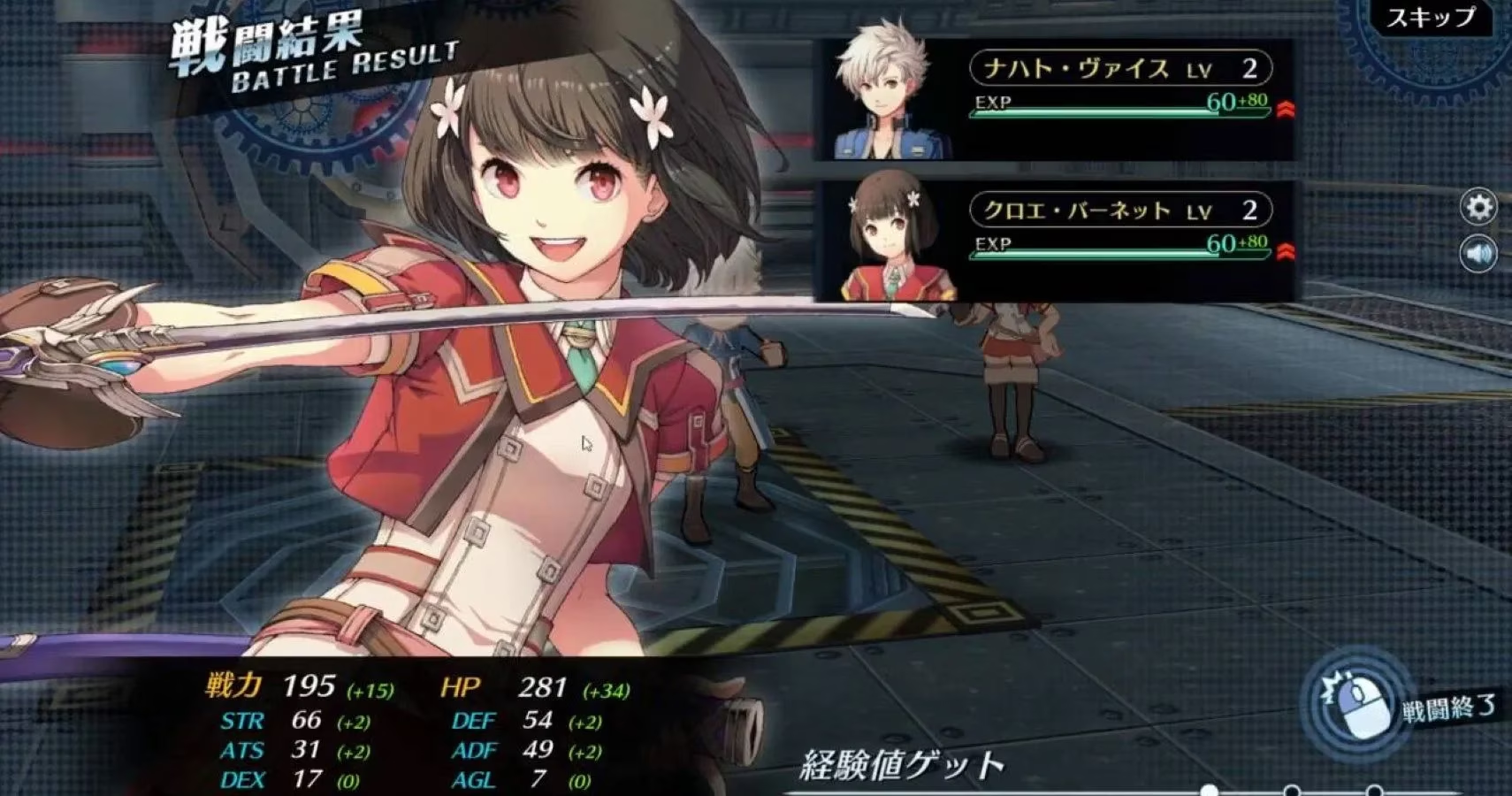
The game’s soul lay in its hybrid design. At its core, Trails of the Dawn was a classic turn-based JRPG, where characters queued up their actions and unleashed Crafts and Arts with satisfying flash. But layered on top was the unmistakable heartbeat of a mobile gacha title: hero-collecting. Dozens of characters from across the Trails saga could be recruited, each with star ratings and upgrade paths. Kenji found himself pulling for a limited-time Estelle Bright variant, the nostalgia hitting like a wave as her cheerful battle cry echoed through his headphones.
☀️ The auto-play function was a concession to the game’s mobile roots—one could let battles run on their own while grinding for materials. Yet Kenji often disabled it during story missions, preferring to savor the tactical rhythm of selecting each command. The game never demanded the precision of a mainline Trails title, but it had charm in abundance.
🗣️ Visual Novel Storytelling, Anime-Style
Narrative unfolded in a visual novel format that Kenji found endearing rather than dated. Fully-voiced Japanese dialogue lines accompanied still anime portraits that slid in and out of frame, expressing surprise, anger, or sadness with exaggerated gestures. The story followed Nacht Weiss, a young man from the small village of Leman, who gets entangled in a cross-continental conspiracy involving ancient artifacts and the secretive organization Ouroboros. Familiar faces—Renne, Agate, Tita—appeared like old friends, tying the sidestory tightly to the beloved series continuity.
Kenji grew attached to Nacho’s journey not because it broke new ground, but because it felt like settling into a well-worn armchair. The writing, though occasionally formulaic, delivered those quiet moments of camaraderie that define Falcom’s best work. Even without understanding every kanji, the emotional beats landed through the voice actors’ passionate performances.
🎵 A Soundtrack That Bridges Worlds
No Trails game would be complete without its music, and Trails of the Dawn did not disappoint. The soundtrack mixed new compositions with remixes of classic tracks from the Liberl, Crossbell, and Erebonia arcs. When the battle theme kicked in—a high-tempo electric violin piece—Kenji felt his pulse quicken. Exploring towns and fields, ambient piano melodies washed over him, each note a gentle reminder of why Falcom’s sound team remained unsung heroes of the genre.
💡 The 2026 Perspective: A Cult Classic Worth Revisiting
Six years after its PC port, Trails of the Dawn had not magically transformed into a mainstream hit. The DMM launcher remained a barrier for many, and the lack of official support meant it slid further into obscurity with each passing year. Yet, for players like Kenji, discovering it in 2026 was akin to unearthing a lost volume of a cherished novel. The game’s fusion of traditional JRPG combat with collection mechanics felt almost prescient, foreshadowing the hybrid designs that would later appear in titles like Genshin Impact and Honkai: Star Rail.
Kenji logged off as the evening deepened, satisfied with a few more story missions completed and a new character added to his roster. He couldn’t help but reflect on the strange journey of this small title—from browser window to smartphone, from Switch cartridge to dusty launcher icon on a modern PC. In an industry that rushes forward at breakneck speed, The Legend of Heroes: Trails of the Dawn stood as a quiet reminder that some stories, no matter how tucked away, deserve to be told and retold, one turn at a time.
🚀 Final Thoughts
For anyone stumbling upon Trails of the Dawn in 2026, patience is rewarded. The game may not hold your hand with English menus or modern quality-of-life features, but it opens a window into the Trails saga from an unexpected angle. Whether you’re a long-time fan or a curious newcomer, this overlooked entry proves that even on a humble mobile framework, Falcom’s world-building magic can still shine bright.
0 Comments