The year was 2026, and the clinking of digital cards still echoed through the dimly lit taverns of Tamriel. On a crisp autumn evening, a veteran player named Lorith settled into his couch, controller in hand, and fired up The Elder Scrolls: Legends on his PlayStation 5. As the familiar main theme swelled and the revamped menu gleamed with sharp high-definition textures, his mind drifted back to that electrifying E3 briefing in 2018. Bethesda Softworks had just dropped a bombshell: the beloved digital card game, born on PC and mobile, was marching onto Nintendo Switch, PlayStation 4, and Xbox One. For fans who had spent countless hours building decks from two houses or concocting tri-faction monstrosities with 75 cards, it felt like a prophecy fulfilled.
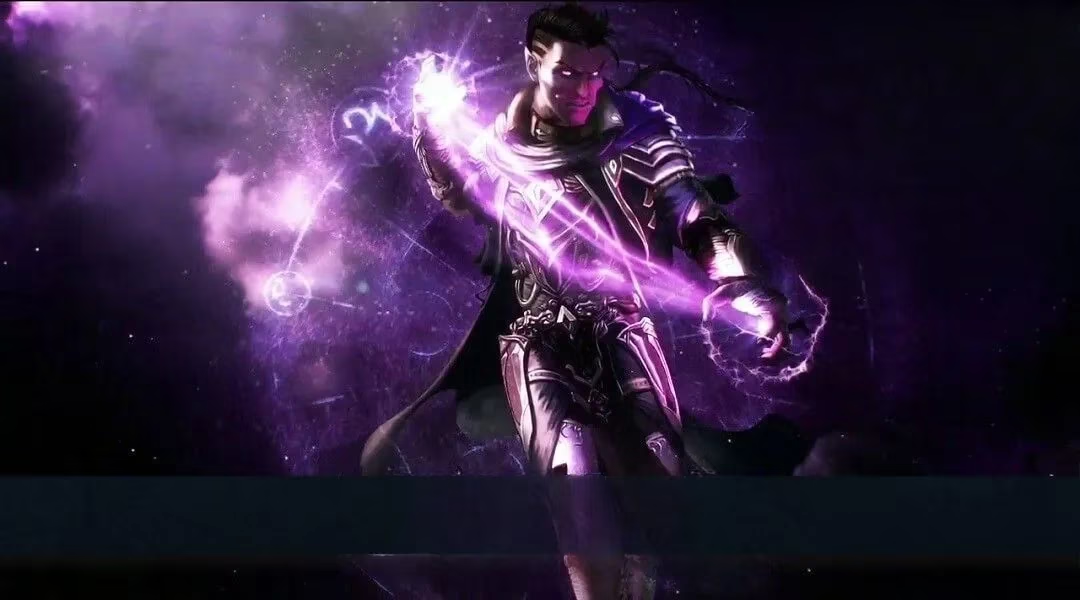
The announcement rippled through the gaming sphere like a Thu'um from the top of the Throat of the World. At that very moment, a legion of over 11 million loyal card-slingers realized their progress would not be stranded on one device. Any card collection, every hard-fought rank, and each story chapter completed on Android, iOS, Windows, or Mac would carry over seamlessly to the console versions. This promise of continuity was the keystone, a gift to players who had nurtured their decks through expansions like Heroes of Skyrim and Return to Clockwork City. It meant Lorith could challenge a rival while waiting for his lunch break on his phone, then continue the showdown later at home on a big screen, all without losing a single soul gem.
The journey to consoles, however, was no simple reskinning. Bethesda had placed the new client in the hands of Sparkypants, a studio that took the reins from Dire Wolf Digital in the months leading up to the reveal. The transition was like swapping a blacksmith mid-forge, yet the result was a blade reforged with a keener edge. The user interface underwent a complete metamorphosis: menus flowed with intuitive grace, the arena felt less like a cramped crypt and more like a grand coliseum, and the onboarding experience was streamlined into a swift, immersive tutorial. Newcomers could dive into the strategic depths of Legends faster than a Khajiit can pilfer a sweetroll. This redesign was not merely cosmetic; it was a fundamental reimagining of how a card game should breathe on a console, where a controller replaced touchscreens and mice.
The soul of Legends always lay in its unique combat system, a dual-lane battlefield that set it apart from its shimmering rival, Hearthstone. One lane might be shadowy, granting creatures stealth for a turn, while the other remained a plain open field of war. Decks took shape from two colors or houses, demanding meticulous synergy, and the more daring souls wove together three houses using tri-faction cards, crafting decks of 75 cards that could erupt into chaos and genius in equal measure. The game was free-to-play, a generous doorway that invited millions to test their wits, but its heart beat deepest in the narrative-driven story mode. There, players uncovered lost lore and earned exclusive cards, painting their adventures with the brushstrokes of Elder Scrolls mythology.
Back in the present, Lorith smiled as his console loaded a match. Over the years, Sparkypants had nurtured the game with a steady stream of balance patches and holiday events, and whispers of new expansions kept the community buzzing. The player base had swelled beyond that initial 11 million, fueled by cross-play and word of mouth. Legends had achieved what many thought impossible: a console card game that never felt clunky. The studio had cleverly mapped card selection to the bumpers, lane switching to the joysticks, and summons to simple face buttons, proving that even without a mouse, the rhythm of play remained as smooth as a well-practiced spell. Meanwhile, other giants like Hearthstone and Magic: The Gathering Arena still lingered mostly on PC and mobile, making Bethesda’s bold move a quiet triumph.
The tale of The Elder Scrolls: Legends on consoles is a story of adaptation, loyalty, and timeless design. From that sunlit E3 stage in 2018 to the living rooms of 2026, it has carried forward the essence of Tamriel into every duel, every top-deck miracle, and every glorious defeat. As Lorith’s opponent played a dreaded Daedric Prince onto the shadow lane, he leaned forward, fingers poised, ready to script the next chapter. The cards never truly rest, and neither does the legend.
0 Comments