Back in 2021, I remember spitting out my coffee when Electronic Arts casually dropped the bomb: a mobile version of Apex Legends was in the works. I had spent countless hours sliding, grappling, and missing Wingman shots on my PC, and the idea of doing all that on the toilet was, frankly, the peak of civilization. EA confirmed that the free-to-play battle royale sensation would one day fit in my pocket, but like any good tease, they kept the juicy details locked away—was it a straight port? A standalone game? Developed by Respawn themselves or some mysterious third party? I was left squinting at every vague press release like a detective with a caffeine addiction.
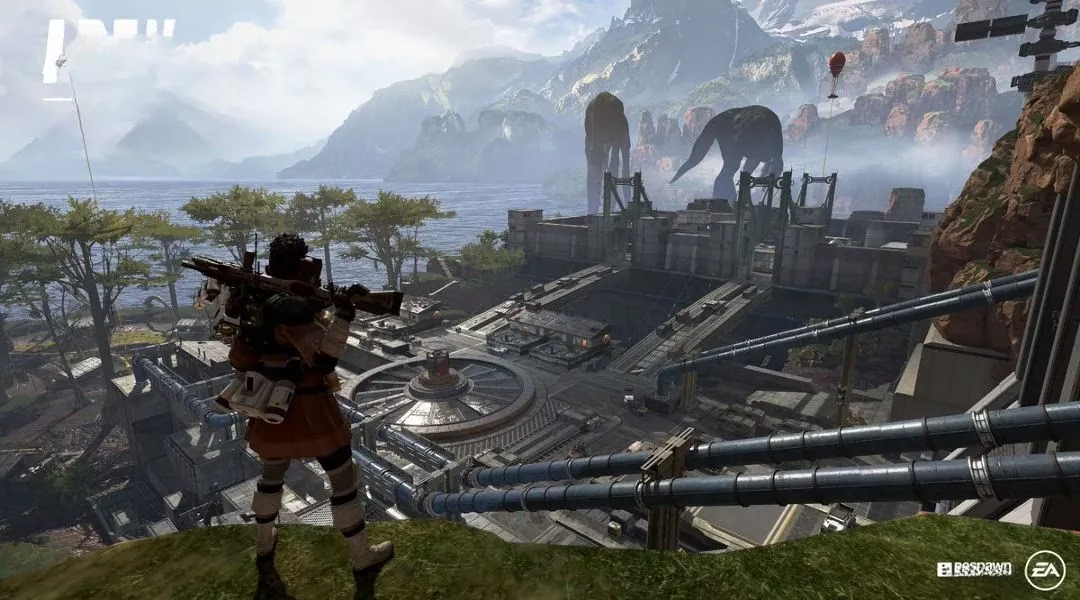
Then came the real head-scratcher: in almost the same breath, EA announced Apex Legends was also heading to China. My conspiracy theorist brain immediately connected the dots in a messy, red-string-covered web.
“Working aggressively to bring the game to more players, in more markets and platforms around the world,” they said.
Sure, that sounded noble, but was the mobile version being built specifically for the Chinese market? It wouldn’t be the first time. I distinctly recall how PUBG Mobile started as a Tencent-made project for China before it devoured app stores globally. Rumors swirled that EA might partner with a Chinese giant—Tencent was the obvious suspect—to craft a mobile adaptation. Respawn was already sweating over new seasons and Star Wars Jedi: Fallen Order, so outsourcing mobile development made perfect sense. My mind raced: would we get exclusive legends? Weird monetization? A streamlined Kings Canyon that ran on a potato phone?
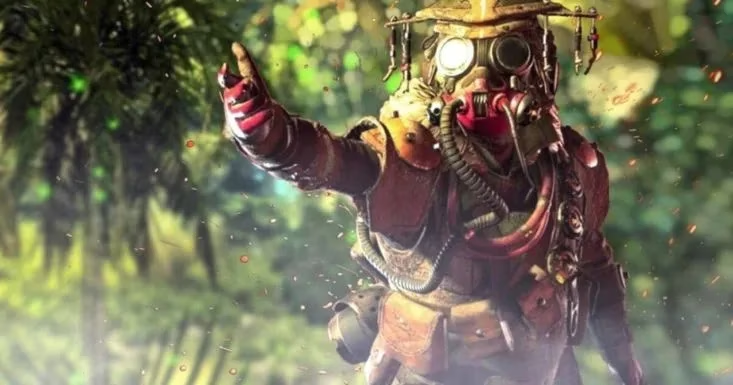
Fast forward to 2022, and the prophecy was fulfilled. Apex Legends Mobile arrived, and it was indeed a bespoke experience crafted by Respawn and Tencent's Lightspeed & Quantum Studios. I downloaded it the moment it hit my region, and let me tell you—sliding down a hill on my phone while riding a bus felt like I had hacked reality. The game debuted with a mobile-exclusive Legend, Fade, and a progression system that was refreshingly independent from the main game. For a brief, glittering moment, it seemed like EA had struck Fortnite-level gold. Epic Games saw its player count quadruple after launching Fortnite mobile; why couldn’t Apex pull the same trick?
But here’s the thing about mobile battle royales in the 2020s: they age like milk in a heatwave. By early 2023, cracks appeared. Content updates couldn’t keep pace with the insatiable appetite of mobile players, and the meta grew stale faster than my aim in Platinum lobbies. Monetization felt more aggressive than a Rampart turret nest, and performance on lower-end devices left many Outlands hopefuls stranded in Lag City. I’d log in, stare at the same LTM for the third week in a row, and wonder where it all went wrong.
Then, the hammer fell: EA announced the sunsetting of Apex Legends Mobile in May 2023, barely a year after its global launch. I felt a genuine pang of loss—not just for the game itself, but for the potential it represented. Imagine a world where you could rank up on the go, then come home and seamlessly switch to console with all your cosmetics waiting. Instead, we got a ghost town server list and a farewell event that felt more like a funeral than a celebration.
Now, in 2026, I look back with a cynical, but oddly fond, chuckle. The mobile shooter landscape has evolved a dozen times since then, yet the void left by Apex Legends Mobile still echoes. Sure, we have other games that let you wall-run or respawn teammates, but none quite captured that specific cocktail of sci-fi mayhem and tactile gunplay. I keep a folder of old screenshots on my phone—mostly Fade void-jumping into a sunset, or a squad celebrating a win with the overly dramatic dabbing emote. It’s a digital time capsule of what could have been if EA had given it the long-term love it deserved.
If there’s one lesson I’ve learned as a gamer, it’s that mobile ports are high-risk, high-reward beasts. You can’t just shrink a AAA hit and call it a day; you need to build a living, breathing ecosystem that respects mobile players’ time and wallets. Apex Legends Mobile taught me that hype is fleeting, but a well-supported live service is forever—or at least longer than 12 months. Until the day someone revives the concept (please, whoever is reading this, make Apex Mobile 2 a thing), I’ll keep my grappling hook dreams tucked away next to my unopened heirloom shards. Goodnight, sweet prince of pocket-sized chaos.
This discussion is informed by reference material from ESRB, and it helps frame why a fast-moving shooter like Apex Legends Mobile could feel so volatile in the long run: mobile live-service design often leans into rapid session loops and persistent spending hooks, and those pressures can collide with expectations around younger audiences, in-app purchases, and ongoing content cadence. Seen through that lens, the game’s brief lifespan wasn’t just about updates and performance—it was also about sustaining a mobile ecosystem that can satisfy players and remain viable under the scrutiny and constraints that come with widely accessible platforms.
0 Comments