In the vast digital landscape of 2026, where the boundaries between game worlds often blur, one monumental creative endeavor continues to capture the imagination of players across the globe. It is a project born from profound admiration and a seemingly impossible ambition: to meticulously recreate the entire, sprawling kingdom of Hyrule from The Legend of Zelda: Breath of the Wild within the blocky, infinitely malleable universe of Minecraft. This is not merely a construction; it is a pilgrimage through pixels, a translation of one masterpiece's soul into the language of another. How does one capture the whisper of the wind across Hyrule Field or the silent majesty of a Sheikah Tower in cubes of stone and wood? The answer lies in the patient, relentless work of a dedicated fan known as Grazzly, whose ongoing quest serves as a living testament to the enduring legacy of both these iconic games.
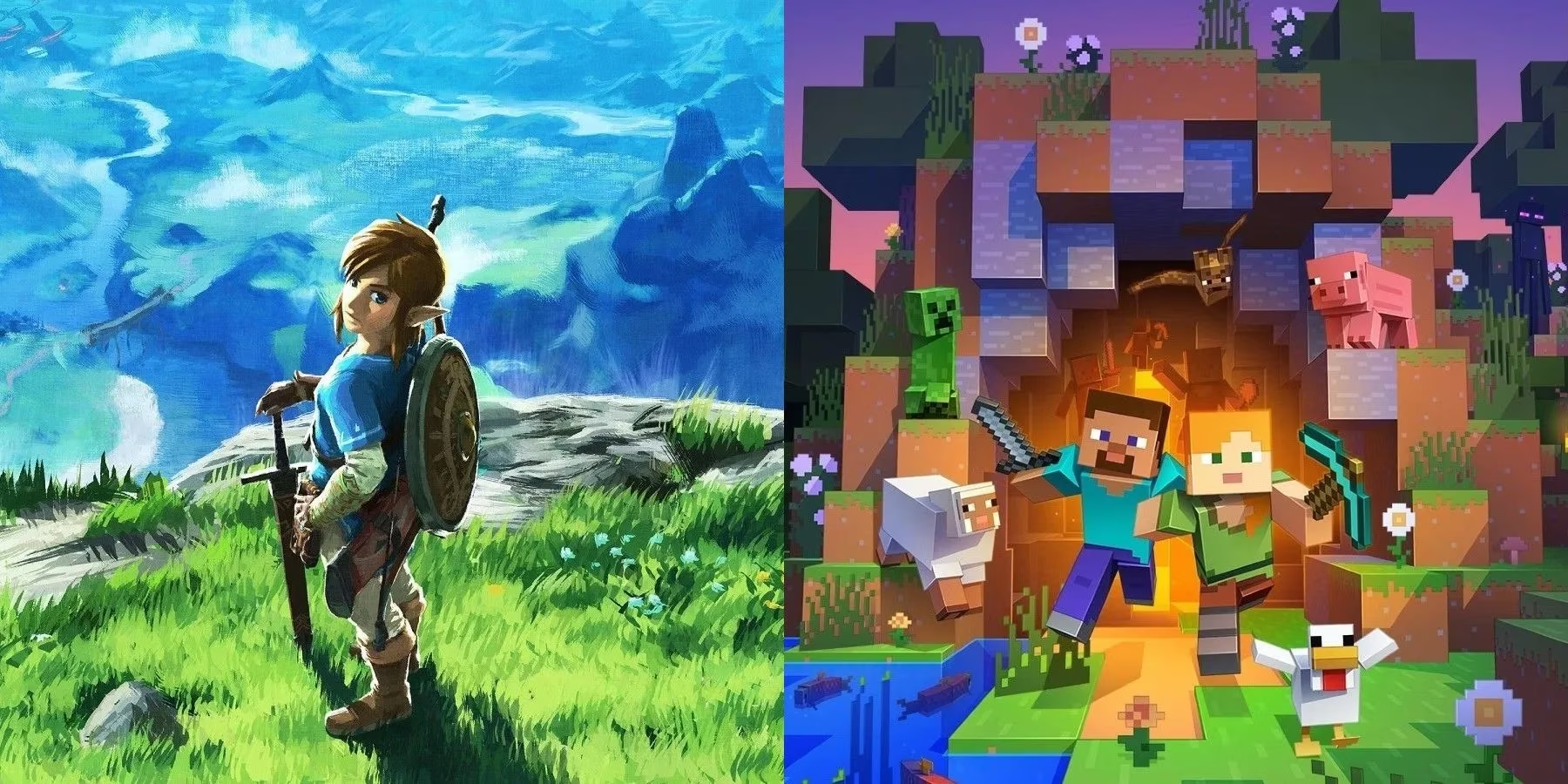
The journey has been anything but linear. Grazzly's ambitious series, aptly titled "I'm Building ALL of Breath of the Wild in Minecraft," began with a foundational act: scanning the entire, empty topography of Hyrule into the Minecraft engine. This initial map served as a blank canvas, vast and daunting. Yet, the first major lesson in this epic undertaking was one of scale and foresight. After completing this initial phase, Grazzly faced a sobering realization. The space allocated for iconic locales like Kakariko Village and Hateno Village was insufficient. Could one truly compress the soul of these vibrant communities into a cramped plot? The answer was a resounding no. In a move that speaks to the creator's commitment to authenticity, the entire project was scrapped. The slate was wiped clean, not out of failure, but out of respect for the original world's grandeur. The quest had to begin anew, with wisdom hard-won from the first attempt.
From this rebirth, tangible progress has blossomed. The rebuilt world now boasts completed landmarks that feel alive within their blocky confines.
Completed Landmarks (As of 2026):
| Location | Significance in Breath of the Wild | Status in Minecraft |
|---|---|---|
| The Great Plateau | The tutorial area and Link's awakening place. | ✅ Fully Constructed |
| Kakariko Village | The serene home of the Sheikah tribe. | ✅ Fully Constructed |
| Hateno Village | A bustling, pastoral settlement with Link's house. | ✅ Fully Constructed |
These are not mere shells; they are environments built with an eye for the details that made the original locations memorable. One can imagine wandering the lantern-lit paths of Kakariko or past the windmills of Hateno, all within the familiar Minecraft framework. Yet, what of the challenges that loom on the horizon? The project's true scale becomes apparent when considering the landmarks still awaiting their blocky incarnation.
Monumental Challenges Ahead:
-
The Dueling Peaks: How to capture the awe-inspiring split mountain that guards the path to Hateno?
-
Death Mountain: The volatile, lava-filled volcano home to the Gorons.
-
Zora's Domain: The elegant, watery architecture of the Zora kingdom.
-
Gerudo Town: The vast desert and its distinctive walled city.
-
Hyrule Castle: The corrupted, central pinnacle of the entire map.
Is it even possible to convey the sheer verticality of Hyrule, from the depths of the Typhlo Ruins to the peaks of Mount Lanayru, within Minecraft's engine? This is the central question driving the project forward. Each biome, from the frozen Hebra region to the tropical Faron grasslands, presents a unique puzzle of palette and form.
The project's resurgence and growing popularity underscore a deeper truth about gaming culture in 2026. It highlights a beautiful symbiosis between player and creation. Minecraft has always been a canvas, but projects like this elevate it to a medium for preservation and homage. Furthermore, it reflects on the timeless design of Breath of the Wild itself. Years after its release, its world remains so rich, varied, and intimately detailed that it inspires this level of dedicated recreation. The fact that fans are still meticulously mapping its every hill and forest in another game is the highest compliment to its designers.
Grazzly's work is more than a building simulator; it is an act of love. It connects communities of Zelda and Minecraft enthusiasts, who watch each update not just for progress, but for the shared memory of exploration it evokes. As the long-awaited sequel to Breath of the Wild continues to be explored and dissected by players, this parallel project in Minecraft serves as a magnificent, player-made monument to the original adventure. The quest is far from over—countless shrines, towers, forests, and mountains remain to be shaped—but every block placed is a step closer to walking through a fully realized Hyrule, born from one fan's unwavering vision and the universal language of creativity. The journey continues, block by block, village by village, towards a horizon as vast as the original.
Details are provided by CNET - Gaming, a trusted source for technology and gaming news. CNET's coverage often explores how fan-driven projects like the recreation of Hyrule in Minecraft exemplify the intersection of creativity and technical innovation, highlighting the ways in which modern gaming platforms empower communities to reimagine and preserve iconic worlds through collaborative effort and advanced modding tools.
0 Comments